At the age of 46, I suffered a stroke and am doing my best to recover and put that behind me. My brain works differently now, which I recognize due to my former profession as a programmer. Though I do not FEEL different, I recognize that I AM different with different behaviors than before. This makes me very strange. And I was already very strange before this consciousness-altering event. So who am I now? I can still write, so sometimes, I think I'll do that.
In a more serious tone, this is much closer to what really happened as explained by a Registered Nurse. My account is from my memory, which in light of what happened as described below, is understandably fractured.
From Jennifer:
“The original bleed was worse than I had thought. Not because anyone told me it wasn’t bad, but no one said it was, and Ming’s neuro exam had been so stable.
The original bleed and subsequent swelling of the brain in response to the injury caused a pretty significant right to left midline shift. That is, a fairly good part of the right side of the brain was pushed over into the left side because there was no where else for it to go. This is a kind of herniation. Ming has had serial CT’s that have all been pretty stable. No new bleed and only mild increase in swelling but nothing surprising. It is difficult to see the clot as they are doing quick CTs without contrast and he said an MRI is best to evaluate the bleed. That said, they do not expect any of these things to change significantly (improvement wise) for quite sometime. It could take a month to see any improvement in the swelling on scan. But a worsening would be obvious, and goes without saying, bad.
Since admission:
they have been managing his blood pressure, oral or IV depending on the circumstance (as he has now been in and out of the ICU three times).
Managing the clot with anti coagulation therapy, first heparin drip and now lovenox injections (which neurosurgery said that now with therapeutic levels of lovenox there is no indication to switch him back to heparin)
Managing his pain as much as they can non narcotic but recently have had to resort to narcotics as the pain has worsened.
This brings us to the swelling and the event that happened yesterday evening. They have been using 3% sodium solution with a goal of pulling extra fluid from the brain tissue to help relieve the pressure that is causing the pain and deficits. The bleed and swelling are both contributors to this midline shift. Well, he can’t stay on this solution forever as it will affect his kidneys and it’s hard to keep all of his other electrolyte in balance with that much sodium. Because his neuro exams had been so stable (aside from the seizure activity) they decided to start weaning the sodium solution. Ming’s body decided it wasn’t ready. As the day went on he started having increased headaches and nausea/vomiting. Then he declined rapidly with a significant drop in heart rate and stopped breathing. They quickly intubated. Luckily the response team included the Neurosurg fellow. He said he literally watched Ming’s pupil blow in front of him. Not that this is good by any standard but the fact that they were all there meant quick response. They gave him a drug called mannitol, which does the same thing the Na does only super fast. With the lowered Na infusion throughout the day Ming’s brain started swelling again. Only this time instead of pushing right to left it pushed down. All of it is bad, but down is really bad because this puts pressure on the brain stem which controls your heart rate and breathing. The Mannitol acted quickly, Heart rate recovered and pupils returned to equal and reactive. They took him for another scan and it still showed no significant change.
They left him intubated and lightly sedated overnight. Another video EEG which they plan to keep him on through today. They woke him by stopping the sedation several times overnight and did neuro exams. Of course he tried to pull out the tube each time but they had his wrists restrained. Once calmed he would follow commands and then they would give more meds and let him go back to sleep. This morning they turned off the sedation and he woke up and they extubated him. He was doing ok, I happened to call 15min after extubation, sleeping but waking easily and following commands. She said he was not speaking clearly, just kind of mumbling. But that could be all the drugs.
She said the EEG overnight did not show any further seizure activity. They had started him on Keppra the first time around and have now added Dilantin. These can make you super sleepy especially since he got a loading dose last night.
I asked the neurosurgeon what he thought as far as long term prognosis and why they weren’t doing anything more to relieve the pressure. The surgical intervention has risks that far outweigh the benefit given his current condition. I can explain it to you guys if you want me to, but since right now it’s not an option, I’ll skip it. He felt this event tells them they have to go much slower in weaning him off the Na. All things considered he felt Ming could make a close to if not full recovery, but it wasn’t going to be quick or easy. He said he was looking at minimum of a year of rehab.
All of this to be figured out once he is out of the woods for everything else. “
Many of you know what happened to me. Many of you don’t. So, I thought I’d put this information all in one place so everyone can understand what’s happened to me. Feel free to “like” this post so that it propagates. Even in my brain-damaged state, I will understand that you are furthering the propagation of this information and not “liking” my brain bleeding.
I suffered a stroke, or a vascular event, as if getting a blood clot in your brain was some “event” like Comicon or the Lilith Fair or something. This “event” is a lot less fun and even worse food than both of those events.
So, the other day, Dawn, one of my caretakers at the adult care center asked me if I had died. I answered as honestly as I could, “I don’t think so.” Imagine to my surprise to find out that that answer was wrong. She asked me what happened when I was in the ICU. I told her the things I knew from other people telling me, which is primarily how I know things now because my memory of many things has been wiped out. I told her what had been told to me, that I had become “non-responsive” which is nurse talk for “he died” until they called a code on me which is more nurse talk for “everyone get the fuck over here now, someone is dying.” When you are non-responsive, you have basically reverted back to a meat-like status of not breathing and not having a heartbeat. But fortunately, it wasn’t for very long, although said things do damage to your brain over time, that amount of time wasn’t enough to cause my brain to entirely die which is dying for reals. However, from this state, I was able to come back and be able to type up this snarky summary today right now. Although technically I am a zombie, I’m hoping you guys won’t shoot me the next time you see me. My medical bills are high enough as it is right now. Now, although I was fortunate enough to come back from the unresponsive state after a few seconds, I was not lucky enough to beat the current record holder: Jesus at 3 full days. It all did happen near Easter, however. This all happened starting on April 6th.
I had had a headache for about a week after maybe working too hard and too late on a startup project. I went to Mark and Janine’s game night and played some Vampire with them. Afterwards, I got into my van and slept. I woke up the next morning feeling sick and threw up in a bucket I kept near the bed that normally holds some trash. I dumped out the puke into the toilet and started driving towards my primary care physician. Along the way, a car pulled in front of me at a stop light and I crashed into it! Now, I wasn’t feeling too well, and was concerned about the wet splashy noises that were coming from the bathroom, so I didn’t get out and exchange insurance information.
I continued onto the highway and went to my doctor’s appointment. Fortunately, I did so, because unbeknownst to me, I was dying of a brain hemorrage right then.
After I got to the doctor’s office, some people complained about my parking job. Apparently, you do a bad job of parking when your brain is bleeding. Go figure. So, they called security on me, and I was able to negotiate with the security guard to merely repark my car rather than actually drive it outside of the facility and park it in the street. And so I did repark well enough that the person behind me could get by and I ran to my doctor’s office. The staff there saw something wrong in me and my doctor’s husband, who is also a doctor, drove me to the Emergency Room at Stanford where they had an MRI. If you don’t know what that is, it’s a machine to take selfies of inside your brain.
From there, things escalated because they saw that I had had a “vascular event” which turned out to be an intercranial hemmorage or (ICH). In other words, I had had a type of stroke. This got me into the ICU at Stanford where I stayed for a couple of days.
During this stay is when I became “non-responsive”. Apparently, the bleed in my brain was causing pressure in my brain to push it around in a way where it shouldn’t be pushed around. The term I heard was “the pressure was pushing down on your brain stem and you became non-responsive.” They gave me salt directly into my IV which reduced the swelling and pressure and probably prevented me from dying right there.
I don’t remember any of this happening. This is all second-hand information I got from remembering what people told me. I’ll add to this later as I learn more. But so far, it’s been kind of hard to get this information at all. When it comes to brains, it turns out that we don’t really know a whole lot of how they work or don’t work. And so it goes in my case, too.
Since then, I’ve gone to a professional care facility and have been released to be on my own but carefully monitored by a staff of home-care nurses. I’ve been staying with Kristina and Dan Tomalesky, and they have been acting as my caretakers during this time and letting me stay with them in one of their rooms. They have been amazing in the help they have given me during this time and I don’t know how I can ever thank them enough. So, just know that they are the awesomest people in the world and give them more thanks for me whenever you see them.
I’ll write more about the experience as I feel up for it. Mostly these days, I’m taking it easy so that I can heal from this brain injury. Apparently, such a thing is possible. I’ve lost some function, but it doesn’t seem too bad. Although the odds of recovery are not great, in my specific case, it looks like I should make a nearly full recovery. That I can write this now is perhaps significant proof of my progress. I’m often told what I was or wasn’t capable of earlier because I have no memory of any of it so I need to be told second hand things about myself all the time.
I’ll write more about the metaphysical stuff and weird things that happened later. This is mostly just to get the information out there to people who don’t know what happened. It’s likely that I haven’t responded to emails or anything in the last month. And I don’t know exactly who knows or who doesn’t know, so this is just so people out there can now understand my situation a little bit better.
We, the humans of this planet, now share this planet with an intelligence too great to understand. We are the second smartest thing on this planet and forever will be until we destroy ourselves or are destroyed by It, whatever shape It may take.
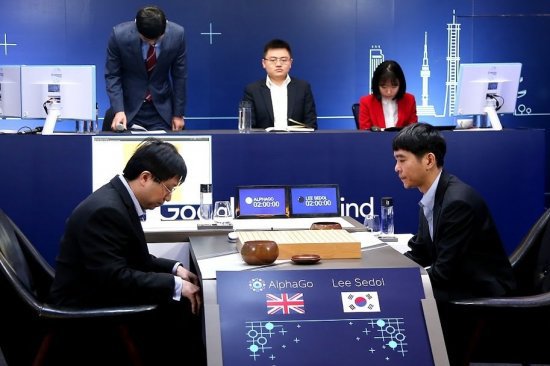
For those of you who haven’t closely followed AI, you might not have heard that a computer has beaten a human grandmaster at an ancient Chinese boardgame called Go. Even if you follow AI, you might not know why this is meaningful since Deep Blue beat the reigning chess champion Garry Kasparov long ago in 1997. And yet here we are. Not much has changed.
But today, everything has changed.
There is something fundamentally different about this victory and the approach to AI that achieved this victory that is quite astounding. So astounding, in fact, that no one really understands how or why it happened. And that, my fellow humans, is the terrible portent of things to come.
I will attempt to illustrate why this is meaningful, which may be a bit difficult because superintelligence is inherently beyond comprehension by any human. To bolster my argument, I will make a bold prediction on this day, March 12, 2016. Lee Sedol will lose his next 2 games in the tournament against AlphaGo. Not only that, but no human will beat the best computer for the rest of time. This is the new normal. Go, as a game, will continue, but computers will be ranked differently than humans. Perhaps someday, a human, through diligently studying many computer games of Go will be able to beat the lowest, worst AI— today’s AlphaGo. But AlphaGo in 2017 will be stronger than today, and stronger yet in 2018. We don’t know the limit yet. Perhaps we will never know the limit of how strong Go AI can be.
Once upon a time, you could race a car against a human and get a fair race. Or a car against a horse. Now, we just know the car is faster. And now, we just know that machines are smarter. But there is one difference between the machine being smarter and the machine being faster. We know how much faster the machine is than we are. We don’t know and can never know how much smarter the machine is than we are.
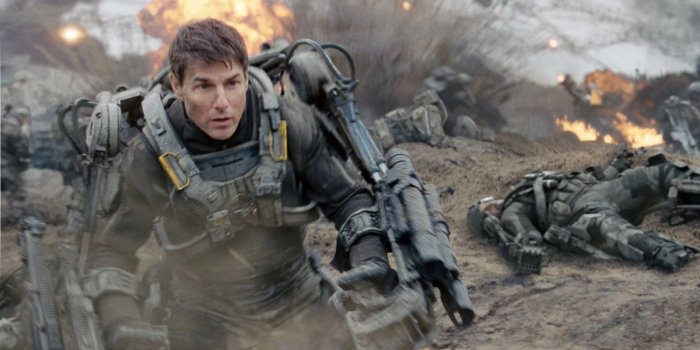
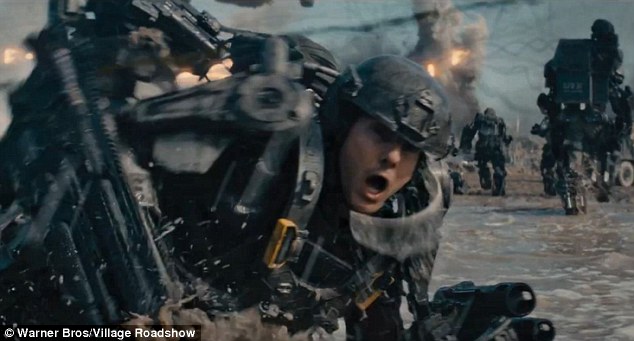
If that is difficult to comprehend, let me try to illustrate with an analogy. Have you seen the movie Edge of Tomorrow? It stars Tom Cruise as a solider with the ability to go back in time to defeat an alien invasion. He uses this ability to play out a save/restore kind of video game where he avoids all of the bad outcomes, no matter how unlikely. In essence, his superpower is a kind of time travel. He knows exactly what the alien is going to do before it does it.
An AI does a similar thing. Except instead of playing it out in real-life, it plays it out in its “mind”. It replays millions and billions of different scenarios of Tom Cruise winning and losing after making one tiny decision and then sorts them into the win or lose column. After adding up all of the scenarios, it knows exactly that picking up the gun has a 50% chance of winning, but not picking up the gun has a 70% chance of winning. That may seem counterintuitive to a soldier to not pick up the gun, but the AI does not care. It just knows that it has a better chance of winning if it doesn’t pick up the gun.
From there it starts to build an insurmountable lead. You, as the opponent fighting the AI that can rewind time, must choose the exact decision which will be the worst of the AI— which the AI has already calculated as in its favor at 70%. If you fail to do so, you are helping the AI. The AI’s percentage goes up. Because you made a mistake. You deviated from the optimal path. So, now the AI can decide between two choices that guarantee either an 80% or 90% win probability. At some point, the computer knows all of the outcomes. In chess, the computer would call out something like checkmate in 23 moves. If you play the next move optimally, the computer will state checkmate in 22 moves. If you make a huge mistake, the computer may say checkmate in 5 moves. But once you’ve reached that state of certainty, there is no turning back. Everything is already known by the computer, if not by you.
This ability is a terribly oppressive way to win a game. How do you beat a game where your opponent has the ability to rewind the future?
Now, here’s where I convince you that AlphaGo is too smart for any human to ever beat again. You remember in the Princess Bride where Westley surprises the Spaniard in the duel by saying, “Well, I’m not left-handed, either!” This is that moment! Savor it.
The method I described above is precisely how, until today, humans have beaten every Go AI. As it turns out, in the game of Go, there are just too many decisions to make in a reasonable amount of time. So, the computer does nothave time to compute all of the possibilities. That’s right, the time-rewinding ability of Tom Cruise was strong, but not strong enough to overcome the combinatorial explosion of choices available in Go.
That’s right. The rewind super power is not good enough. Every Go program that has used it has failed to beat the best humans. So, how does AlphaGo win? Simple. It doesn’t use that super power.
Instead, AlphaGo has a superpower that is orders of magnitude better than what Tom Cruise had in Edge of Tomorrow. Think about that for a moment. Imagine facing an adversary which even if you had the rewind-time super power would beat you as easily as someone beat a normal person without that super power. We cannot begin to comprehend an intelligence where we could rewind time so many times and still not be able to beat it. We cannot comprehend how to beat it or even whether we are winning or not.
One thing that humans do when trying to win a game is to try and score more points in the game. This is true in Go as it is in football. But the computer doesn’t need that crutch. It only needs to win the game by a single point. If it has a choice to make a decision that will lose points, but improve its chances of winning in the end, then it will simply lose points. To make a football comparison, imagine an AI that would give up field goals and touchdowns intentionally sometimes, but would win the game by a small margin a larger percentage of the time. How would you beat such an AI? You don’t know if you’re scoring a touchdown because you are stronger than the AI or if the AI is so much stronger that it is simply letting you because doing so improves its total odds of winning the game but at a smaller margin of victory. You can’t comprehend it. You merely see the outcome that you’ve lost despite playing a game that would seem to be free of human mistakes.
AlphaGo’s superpower is truly amazing because it doesn’t do the time-rewind thing. It does something similar to what humans do. It recognizes patterns by using a neural net. In other words, it has a kind of brain that is different than how current computers work. And like a brain, we don’t really know what’s going on inside. This is very unlike a computer chess AI which can tell us what it’s “thinking”. That is, you can watch all of the replays of Tom Cruise trying out different things and examine why it seems to think that particular choice is the best choice.
AlphaGo picks what it feels is the best choice. Just like what humans do. Except AlphaGo can train much faster with many more games than any human. Humans train by learning games, too. But humans hinder themselves by framing those games in ideas and concepts such as sente (a kind of tempo), thickness (a kind of defensive wall), and other very human-like concepts in order to form common building blocks and to divide up the game to prevent it from being too overwhelming. AlphaGo needs no such crutch. In fact, it doesn’t even understand any of the human concepts of sente, thickness, or whatever. Humans who look at the game afterwards may comment on those constructs, just as scientists can mathematically describe physical phenomenon with formulas and equations. But that is a description after the fact. It is not, in any way, how AlphaGo “thinks” of making its moves.
The expert commentators on the games have gotten chills from watching AlphaGo play Lee Sedol. It’s because the computer makes moves that defy human understanding of the game. The human framing of breaking things down into Go “concepts” is alien to AlphaGo and so its results are alien to us. It is not constrained by those human concepts that have evolved over 3000 years. It goes beyond that into superhuman intelligence territory. I envy those Go experts since they truly understand what it’s like to face a superintelligence. They have described it as both terrifying and exciting.
Today, we are all Lee Sedol, the second smartest things on this planet. The smartest things are so smart, we can’t even comprehend them. And so, today, we shall usher in this new era of computer superintelligence which is both terrifying and exciting. May our future robotic overlords have mercy on our tiny flawed human minds.
2020-10-07 Update:
Watch this video about the Lee Sedol vs. AlphaGo match to get a sense of the human tension and stakes of this game to give some context for those of you who don’t understand enough about Go to understand how a large population of the earth consider it to be a game that reflects our human intelligence, spirit, and creativity.
It was deeply unsettling to me when AlphaGo beat Lee Sedol, and this movie dramatizes why I felt that way. Watch it even if don’t understand anything about Go. Watch especially if you don’t. You’ll understand more about Go and about how people have found a uniquely human spirit in Go. And you’ll be relieved that a machine cannot entirely steal that spirit from us human beings.

 Free Range Programmer